
Truck tyre sizes: reading, comparing and changing them
A truck tyre size such as 315/70R22.5 is enough to work out the tyre's height: the sidewall is 70% of 315 mm, the rim is 22.5 inches, and the rest is arithmetic. That is how this guide compares sizes, so you can see what changes when a lorry moves from one to another.
Reading the size
From those three numbers: sidewall height = 315 × 0.70 = 221 mm; overall diameter = 22.5 × 25.4 + 2 × 221 = 1,013 mm. These are nominal figures. A real tyre differs a little by make and model, and squats under load, so the rolling circumference is shorter than the nominal one; the tyre maker's data book gives the exact numbers. The load index and speed symbol that follow the size have their own guide.
The common sizes, to scale
| Size | Height | Sidewall | Measuring rim | Made for |
|---|---|---|---|---|
| 315/70R22.5 | 1,013 mm | 221 mm | 9.00" | steer, drive The everyday tractor-unit size in Europe, for regional and long-haul work. |
| 315/80R22.5 | 1,076 mm | 252 mm | 9.00" | steer, drive; construction, coach Taller and heavier-duty: rigids, tippers and construction work. |
| 295/80R22.5 | 1,044 mm | 236 mm | 8.25" | steer, drive; coach Narrower, on rigids and coaches. |
| 385/65R22.5 | 1,072 mm | 250 mm | 11.75" | trailer; also steer and construction The tri-axle trailer size, also used on heavy front axles. |
| 385/55R22.5 | 995 mm | 212 mm | 11.75" | steer, trailer Low-profile wide single for steer axles and lower trailers. |
| 315/60R22.5 | 950 mm | 189 mm | 9.00" | steer, drive Low-profile, for low-height tractor units. |
| 295/60R22.5 | 926 mm | 177 mm | 9.00" | steer, drive Low-profile, for low-height tractor units. |
| 355/50R22.5 | 927 mm | 178 mm | 11.75" | steer Very low-profile steer size. |
| 435/50R19.5 | 930 mm | 218 mm | 14.00" | trailer Wide single on 19.5-inch rims for low-floor trailers. |
| 445/45R19.5 | 896 mm | 200 mm | 14.00" | trailer Wide single on 19.5-inch rims for low-floor trailers. |
"Made for": the axle positions for which Continental lists tyres in each size (Technical Data Book, 03/2024). Measuring rim: the rim width, in inches, the size's dimensions are measured on.
Two things the drawing shows
315/70 and 315/80 are not the same tyre with more rubber. The /80 stands 63 mm taller, 6.2% more. On one axle, or as a twin pair, they cannot be mixed.
385/65R22.5 and 315/80R22.5 are almost the same height: 1,072 against 1,076 mm, 3.5 mm apart. The 385/65 is a wide single that carries more on one tyre, which is why it appears on heavy front axles as well as on trailers. The lower 385/55 (995 mm) is the low-profile alternative.
Compare two sizes
Now:
Instead:
Nominal dimensions from the size code. Check the tyre maker's data and the vehicle maker's approved sizes before changing.
Before you change size
- Load and plate. The new size's load index must cover the axle's plated weight in the way it is fitted, single or twin. Check it with the calculator.
- The wheel. A different rim diameter means a different wheel. A wider size usually needs a wider rim too: the sizes above are measured on rims from 8.25 to 14 inches wide.
- Room around the tyre. A taller or wider tyre has to clear the wheel arch, mudguards, chassis and, on twins, the other tyre, through the whole suspension travel and steering lock.
- Speedometer and tachograph. The tachograph is set up for a tyre size and circumference, and its inspection, due at least every two years, checks "the tyre size and the actual circumference of the tyres" (Regulation 165/2014, Article 23). Going from 315/70 to 315/80 without recalibrating would leave the speedometer reading about 5.9% low. Have the tachograph workshop check it after a change of size.
- Twins and axles stay matched. Continental's data book links irregular wear to a difference in diameter between the two tyres of a pair, and advises fitting twin tyres of about the same diameter. The same goes for both ends of an axle.
Tyre pressure
The size tells you the tyre; the pressure decides whether it carries the load it is rated for. What the guidance says:
- Set it for the load. Each tyre maker publishes load and pressure tables for every size. The pressures in them are minimums for the load, so set the pressure for what the axle actually carries.
- Measure it cold. Continental defines a cold tyre as one that has stood for several hours, out of strong sun. A pressure taken straight after a run reads high.
- Keep a twin pair equal. In a pair, the tyre with less pressure slips and wears unevenly; Continental advises both tyres at the specified pressure.
- Record it. The DVSA's Guide to maintaining roadworthiness expects pressures to be monitored, recorded on the safety inspection report and kept at the correct level, and any under-inflated tyre investigated.
- It costs fuel. The same DVSA guide: "A 20% drop in tyre pressure can result in a 2% increase in fuel consumption."
The sizes we stock
| Size | Our tyre | Axle | Height |
|---|---|---|---|
| 315/70R22.5 | V-PRO S2 | Steer | 1,013 mm nominal |
| 315/80R22.5 | V-PRO S2 | Steer | 1,076 mm nominal |
| 315/70R22.5 | V-PRO D1 | Drive | 1,013 mm nominal |
| 315/80R22.5 | V-PRO D1 | Drive | 1,076 mm nominal |
| 385/65R22.5 | V-PRO T1 | Trailer | 1,072 mm nominal |
Sources
- Continental, Truck, bus and van tyres: Technical Data Book (03/2024): sizes by axle position, measuring rims, twin fitment, cold pressure.
- Guide to maintaining roadworthiness, DVSA, sections 5.2 and 5.5
- Regulation (EU) No 165/2014, Article 23 (as it applies in the UK), legislation.gov.uk
Load index chart and calculator · Which tyre for which axle · See all five sizes and prices
Order by axle
Public price per tyre, ex VAT. Signed in to your account, the site shows your own prices.
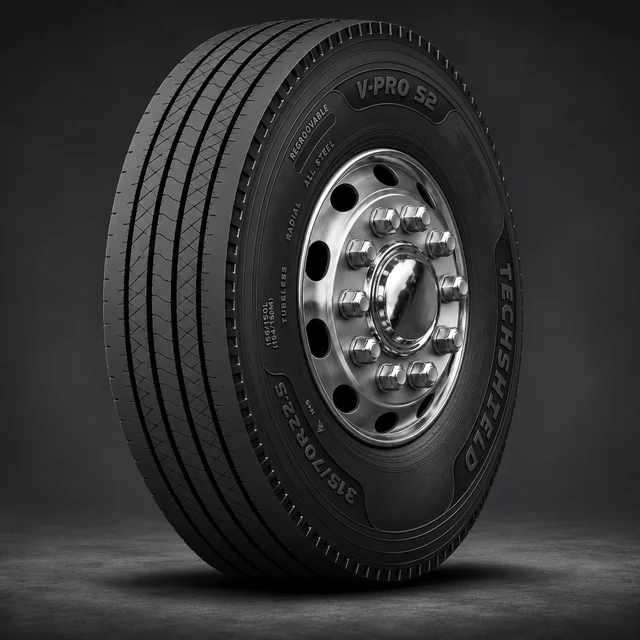 Steer315/70R22.5 V-PRO S2£205 ex VAT
- Steer315/80R22.5 V-PRO S2£210 ex VAT
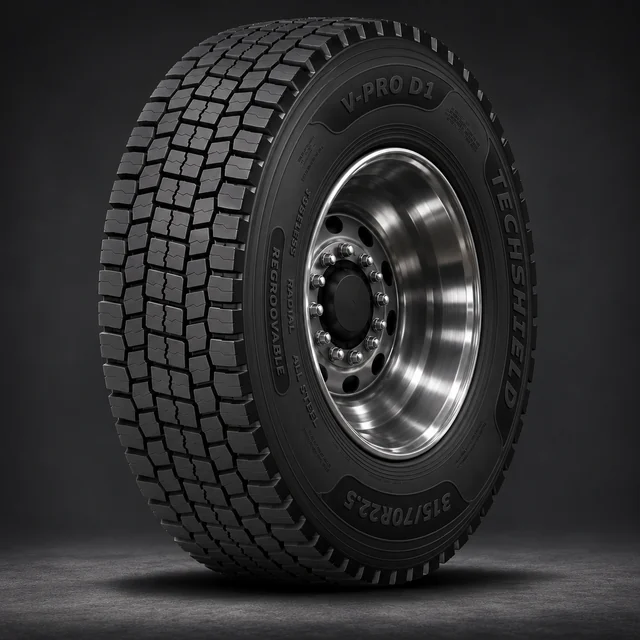 Drive315/70R22.5 V-PRO D1£205 ex VAT
- Drive315/80R22.5 V-PRO D1£210 ex VAT
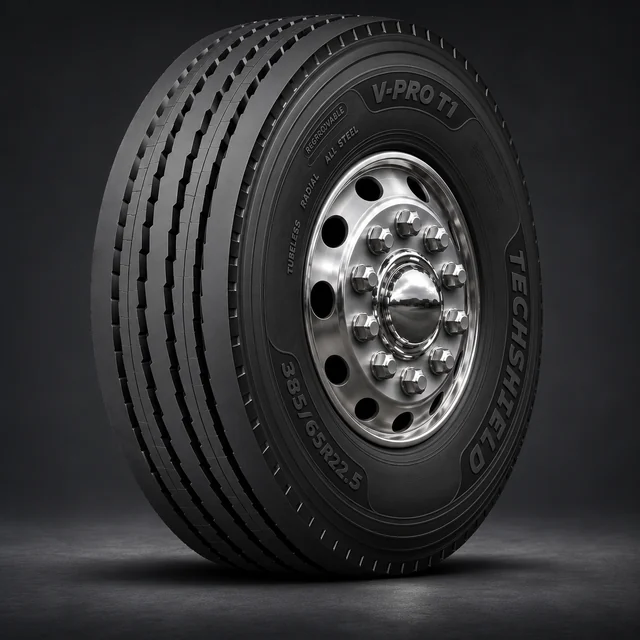 Trailer385/65R22.5 V-PRO T1£215 ex VAT