
Truck tyre load index: chart, calculator and the UK axle limits
The load index on a truck tyre is a code for the most weight one tyre is rated to carry. In 156/150L the first number is for a tyre running on its own, the second for a tyre running as one of a twin pair, and L is the speed it holds that load at. Below: the full chart, a calculator for your axle, and what the numbers mean against the axle limits in Great Britain.
Decoding the sidewall
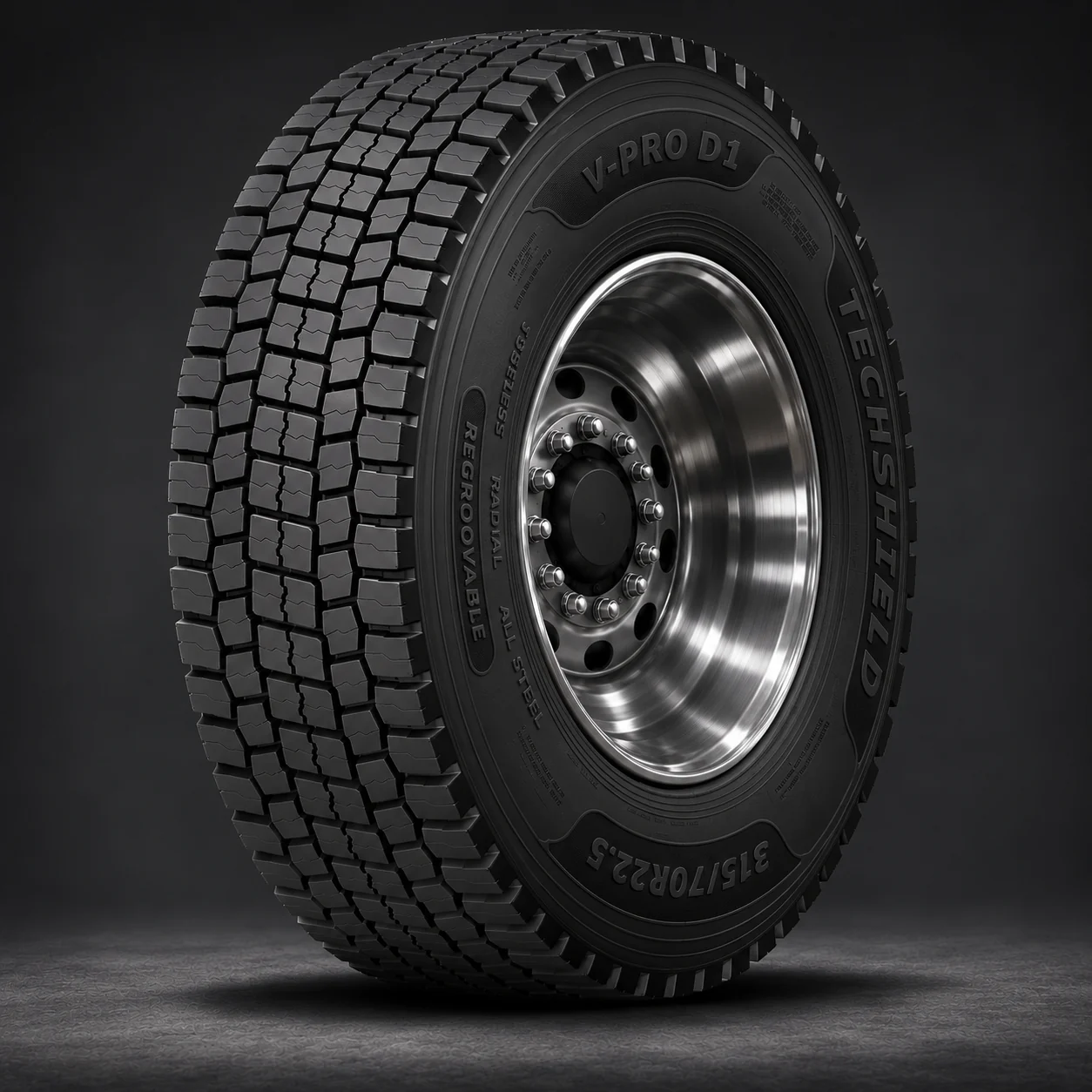
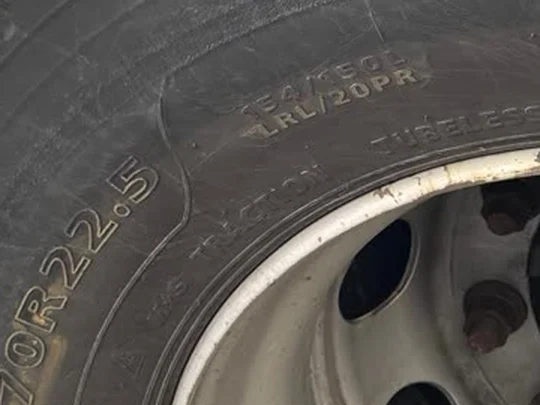
Some sizes carry a second rating in brackets, such as 156/150L (154/150M): the tyre can run at the higher loads up to speed L, or at the lower loads up to the faster speed M. A tyre with one number only, such as 164K, is built to run single, as 385/65R22.5 trailer tyres do.
The load index chart, in kg
Load per tyre, at the speed of the tyre's speed symbol and at the inflation pressure the tyre maker gives for that load. The table is an industry standard, the same for every brand; we checked it line by line against two makers' published tables.
| Index | kg per tyre |
|---|---|
| 100 | 800 |
| 101 | 825 |
| 102 | 850 |
| 103 | 875 |
| 104 | 900 |
| 105 | 925 |
| 106 | 950 |
| 107 | 975 |
| 108 | 1,000 |
| 109 | 1,030 |
| 110 | 1,060 |
| 111 | 1,090 |
| 112 | 1,120 |
| 113 | 1,150 |
| 114 | 1,180 |
| 115 | 1,215 |
| 116 | 1,250 |
| 117 | 1,285 |
| Index | kg per tyre |
|---|---|
| 118 | 1,320 |
| 119 | 1,360 |
| 120 | 1,400 |
| 121 | 1,450 |
| 122 | 1,500 |
| 123 | 1,550 |
| 124 | 1,600 |
| 125 | 1,650 |
| 126 | 1,700 |
| 127 | 1,750 |
| 128 | 1,800 |
| 129 | 1,850 |
| 130 | 1,900 |
| 131 | 1,950 |
| 132 | 2,000 |
| 133 | 2,060 |
| 134 | 2,120 |
| 135 | 2,180 |
| Index | kg per tyre |
|---|---|
| 136 | 2,240 |
| 137 | 2,300 |
| 138 | 2,360 |
| 139 | 2,430 |
| 140 | 2,500 |
| 141 | 2,575 |
| 142 | 2,650 |
| 143 | 2,725 |
| 144 | 2,800 |
| 145 | 2,900 |
| 146 | 3,000 |
| 147 | 3,075 |
| 148 | 3,150 |
| 149 | 3,250 |
| 150 | 3,350 |
| 151 | 3,450 |
| 152 | 3,550 |
| 153 | 3,650 |
| Index | kg per tyre |
|---|---|
| 154 | 3,750 |
| 155 | 3,875 |
| 156 | 4,000 |
| 157 | 4,125 |
| 158 | 4,250 |
| 159 | 4,375 |
| 160 | 4,500 |
| 161 | 4,625 |
| 162 | 4,750 |
| 163 | 4,875 |
| 164 | 5,000 |
| 165 | 5,150 |
| 166 | 5,300 |
| 167 | 5,450 |
| 168 | 5,600 |
| 169 | 5,800 |
| 170 | 6,000 |
Highlighted: 140 and above, where most 22.5-inch truck and trailer tyres sit.
What the chart shows
The line curves upwards because each step of the index adds a percentage, not a fixed number of kilograms. From 120 to 170 one step adds 2.95% on average, anywhere between 2.44% and 3.57%, so four steps add about 11.9% (150 to 154 is 3,350 to 3,750 kg). Two practical consequences:
- Compare tyres by their index numbers or by the kg in the table, never by subtracting indexes as if they were kilos.
- One or two points of index is a real difference on a lorry: 152 against 154 is 200 kg per tyre.
Twin wheels: why a pair does not carry double
On a twin fitment each tyre is rated lower than the same tyre running alone, so a pair carries well under twice the single figure. Worked out from the chart:
| Marking | One tyre, single | Twin pair | Pair ÷ single |
|---|---|---|---|
| 156/150 | 4,000 kg | 6,700 kg | × 1.68 |
| 154/150 | 3,750 kg | 6,700 kg | × 1.79 |
| 154/149 | 3,750 kg | 6,500 kg | × 1.73 |
| 152/148 | 3,550 kg | 6,300 kg | × 1.77 |
| 160/158 | 4,500 kg | 8,500 kg | × 1.89 |
This is why the second number is the one that counts on a drive axle: a tyre rated 4,000 kg on its own is rated 3,350 kg as one of a pair.
Calculator: is the tyre enough for the axle?
- One tyre is rated for
- -
- The axle is rated for
- -
A check on paper, not a fitting approval: the vehicle maker's tyre specification, the plate and the tyre maker's pressure for the load all apply.
The GB axle limits and the index they need
The Road Vehicles (Authorised Weight) Regulations 1998 set the most an axle may carry in Great Britain. Your vehicle's plate may give a lower figure; then the plate is your limit. Taking each maximum and the tyres it is spread over:
| Axle | GB maximum | Tyres | Per tyre | Lowest index that carries it |
|---|---|---|---|---|
| Single driving axle (drive, twin wheels) | 11,500 kg | 4 | 2,875 kg | 145 (dual), 2,900 kg |
| Single non-driving axle (steer, single wheels) | 10,000 kg | 2 | 5,000 kg | 164 (single), 5,000 kg |
| Tri-axle trailer, one of its three axles (super singles) | 8,000 kg | 2 | 4,000 kg | 156 (single), 4,000 kg |
These are floors, not targets. A steer tyre rated exactly to the axle maximum has no margin for a heavy load shifted forward, a pothole or a tyre a little under pressure. And the plate, not the legal maximum, is what your axle is allowed: a front axle plated at 8,000 kg needs index 156 or more on single steer tyres.
The speed symbol
| Symbol | Speed the load index holds to |
|---|---|
| J | 100 km/h |
| K | 110 km/h |
| L | 120 km/h |
| M | 130 km/h |
A goods vehicle over 3.5 tonnes is held to 90 km/h by its speed limiter, so all of these cover its road speed. The letter still belongs to the rating: the kg in the chart are rated at that speed, and tyre makers publish separate tables for running slower (for example on site vehicles) that you should ask them for, not guess.
Pressure: the rating assumes the right one
The kg in the chart hold only at the inflation pressure the tyre maker gives for that load, measured cold: after the vehicle has stood for some hours and out of strong sun. Continental's technical data book puts it plainly: lower pressure, higher loads or higher speeds than recommended shorten a tyre's life. Each maker publishes load and pressure tables for every size; use the one for your tyre, and set the pressure for the load the axle actually carries.
Load index and ply rating
Ply rating (20 PR, 24 PR) is the older way of stating casing strength, from when casings were built from layers of fabric. On a steel-belted radial it is a strength class, not a count of layers, and makers now state load capacity with the load index and speed symbol. Compare tyres by load index.
Replacing a tyre
- Same size, an index and speed symbol at least as high as the vehicle's tyre specification: on the tyre coming off or in the vehicle's documents.
- Read the right number for the position: the first on single wheels, the second on twins.
- Match the axle: the same size, pattern and rating at both ends of an axle and on both tyres of a twin pair.
The legal backstop is regulation 27 of the Construction and Use Regulations 1986: a tyre must not be unsuitable for the use the vehicle is put to, or for the tyres on its other wheels.
Our tyres: index, speed and ply
| Tyre | Axle | Load index and speed | Ply |
|---|---|---|---|
| 315/70R22.5 V-PRO S2 | Steer | 156/150L | 20 PR |
| 315/80R22.5 V-PRO S2 | Steer | 156/150L (154/150M) | 20 PR |
| 315/70R22.5 V-PRO D1 | Drive | 154/150L | 20 PR |
| 315/80R22.5 V-PRO D1 | Drive | 156/150L (154/150M) | 20 PR |
| 385/65R22.5 V-PRO T1 | Trailer | 164K | 24 PR |
The load index and speed symbol of each are the ones registered for it in the EU product database, EPREL. Look the index up in the chart above, or type it into the calculator.
Sources
- Load index table: Goodyear truck tyre data book (2020), checked against Giti's load and speed index sheet (in pounds) for every index from 115 to 170.
- The Road Vehicles (Authorised Weight) Regulations 1998, Schedule 3, legislation.gov.uk
- The Road Vehicles (Construction and Use) Regulations 1986, regulation 27, legislation.gov.uk
- Continental, Truck, bus and van tyres: Technical Data Book (03/2024), on load index notation and inflation pressure.
Which tyre for which axle · Tread depth: the 1 mm minimum · See all five sizes and prices
Order by axle
Public price per tyre, ex VAT. Signed in to your account, the site shows your own prices.
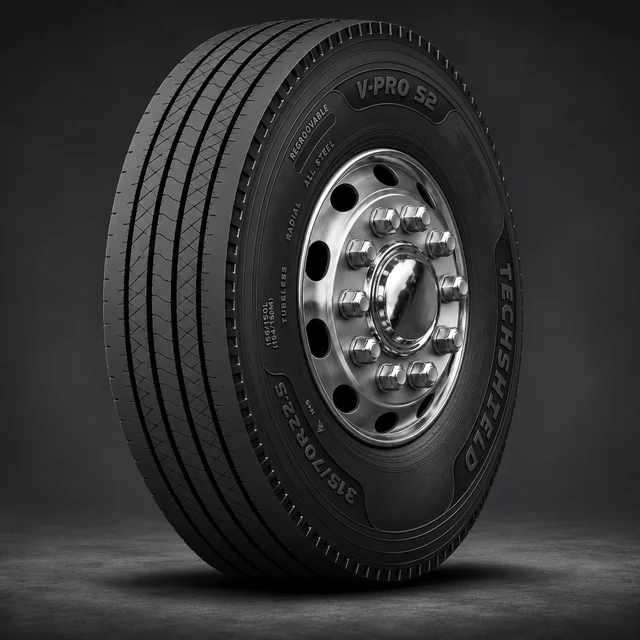 Steer315/70R22.5 V-PRO S2£205 ex VAT
- Steer315/80R22.5 V-PRO S2£210 ex VAT
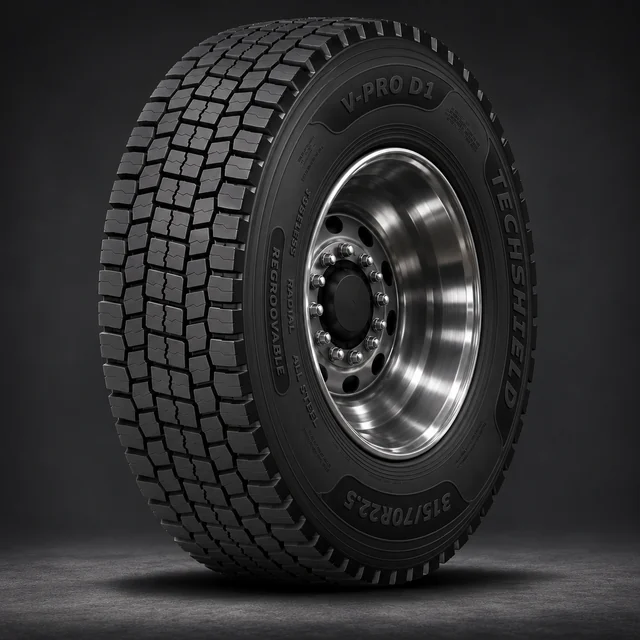 Drive315/70R22.5 V-PRO D1£205 ex VAT
- Drive315/80R22.5 V-PRO D1£210 ex VAT
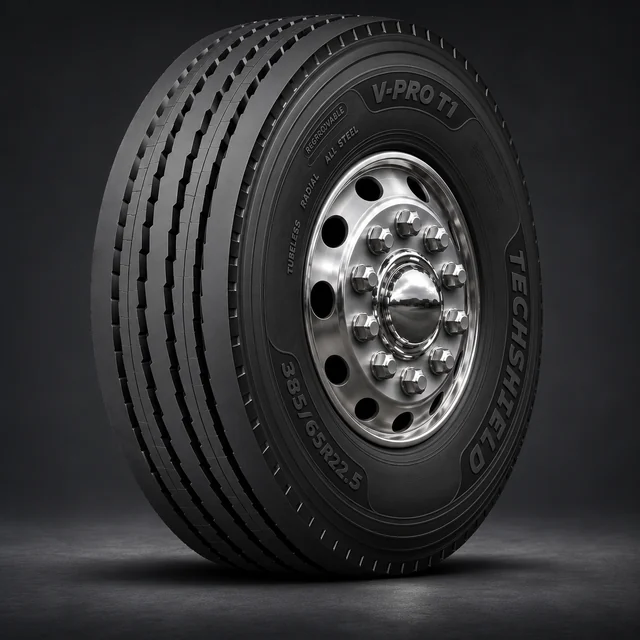 Trailer385/65R22.5 V-PRO T1£215 ex VAT